

There are five classes in the Arkham Horror LCG (Guardian, Seeker, Rogue, Survivor, and Mystic) and each are unique in their own way!
One core component of the Arkham Horror games is the investigators. In some games, they are very similar to each other. They have a special skill and different stats but that’s about it. The Arkham Horror LCG takes it a little farther.
Each character still has a special skill and different stats, but they also have a class which leads to some deck-building restrictions. Each class has its traits and specialties which can be enhanced or pivoted based on a character’s unique skill.

Although every character has a unique way of interacting with it’s class, I wanted to take a moment to talk about the classes themselves. There are five classes in general: Guardian, Seeker, Rogue, Survivor, and Mystic. I do associate the classes with the stats with guardian’s main stat being combat, seeker being intelligence, rogue being agility, mystic being willpower and survivors just do their own thing.
Each class has strengths and weakness and combining these two is what makes the game challenging. They all have an overarching theme and a pragmatic implementation, and this is an attempt to scratch the surface of this giant card pool.
Check out the Game section of MCG for more written reviews or check out the MCG YouTube Channel for Videos and the Reading Rulebooks Podcast!
Guardian

Each class is associated with a color and Guardian is the blue class. The overarching theme of guardian is protection and fighting. The characters are either people associated with justice (police) or someone who is upright in their morals regardless of their job.
The overarching flow of the guardian cards is fighting. This is accomplished through guns, other weapons, or events. They do have some of the best weapons available (not the guns) which makes them excellent fighters. Another staple of guardian to me is healing. I feel like guardian has some of the best healing cards in the game.

Something about how the guardians are built makes them great at taking damage or mitigating attacks. Being in the line of fire is not a concern for them (assuming it’s a reasonable situation).
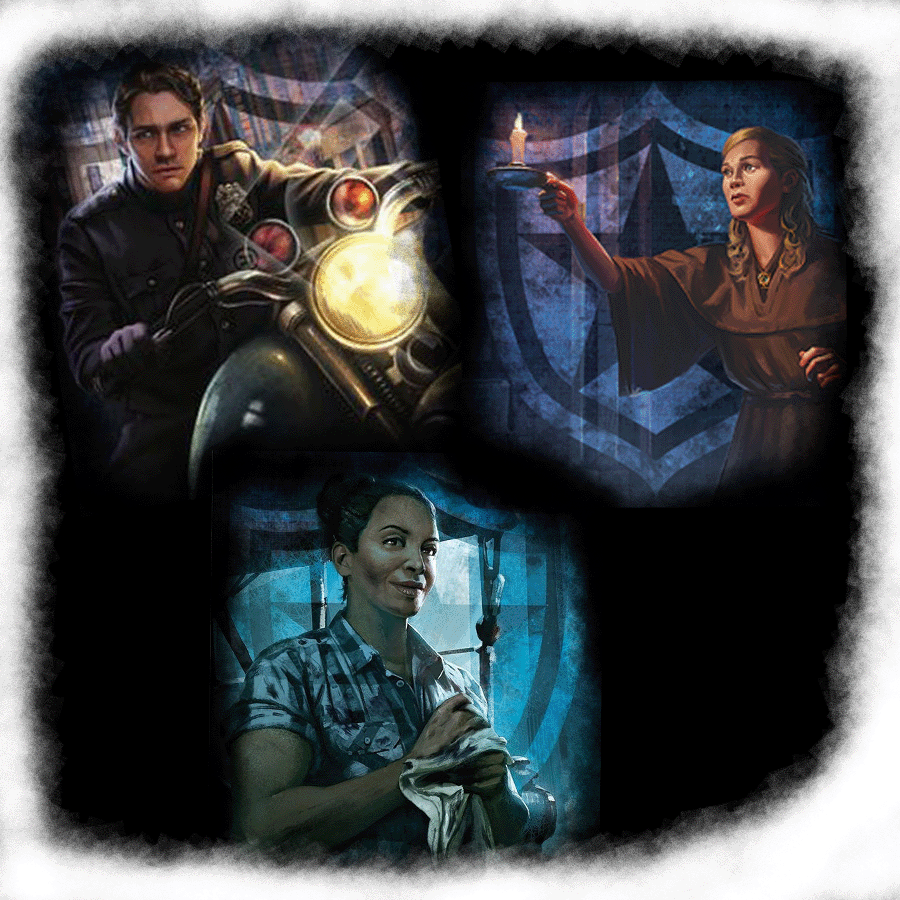
While guardians are strong at fighting, they do have some fairly glaring weakness. The biggest one in my opinion is money. Guardians are not great at getting resources and weapons are expensive. Guardians are often fairly broke. They are resource limited in money but also in cards as there are no real drawing enhancements for a lot of them.
Fighting may be good but getting clues is not an easy task for them. They have to go out of their way and actively spend more resources than other classes to get clues. And while their combat is high, their willpower is relatively low leaving them vulnerable to the mythos deck.

Seeker

The seeker class is an orangish yellow. Some call it orange; some call it yellow. This is class of academics from teachers to students to explorers. It really captures the people who have a thirst for knowledge more than anything.
And maybe that’s why they are so good at investigating. They typically have a high intellect and tools to help uncover even more. Seekers are baseline good. They have access to cards that have consistently good uses. Another staple of seekers is card draw. They can draw cards for days and some builds will consistently cycle a deck.


As you might expect, Seekers are not naturally good at fighting. Do they have tools to offset this? Yes. Is it what you want your seeker to be doing? Probably not. A lot of seekers will have low health as well which leads them to be very squishy when facing monsters.
Rogue
The rogue class is green. If I had to pick a quick description of the rogue class, it would charismatic swindlers. If they want to do something, they’ll do it and probably get their hands a little messy in the process. Rogues are often associated with agility which makes them great at evading monsters. While evading may not be the preferred method of dealing with creatures, Rogues also will play dirty and use their agility as part of their combat.


While this class has good card drawn, they have the best economy cards available in the game. Having, and maybe hoarding, a lot of money is very common for a rogue. As the tableaus build, they gain the ability to do more and more actions per turn.
They don’t specialize in getting clues or fighting (although I do think they naturally lean more towards fighting than investigation). But they can typically do both and fill in whatever gaps are needed. They’re flexible.


However, missing the right tools can really stop a Rogue from getting off the ground. Depending on the deck building and luck of the draw, a rouge can have a very rough start and might not contribute as much as a more focused character. That being said, this is my favorite class, so I really think it comes down to adaptability.
Survivor
Ah, the good old survivor class. The survivor class is paired with the color red. They have deal a tough hand and are going to get by with whatever they can find. MacGyver immediately comes to mind. One trope often associated with this class is “succeed by failing”. Fail a skill test, actually turn it around to make this good thing happen. They are a very scrappy class.


One thing I have noticed about survivors is that they start decently strong but don’t necessarily have anywhere to grow. While they can become more consistent at their successful failures, the don’t do more damage in one shot or get a lot of clues from one action. They are just steady.
Due to their scrappy nature, it can sometimes feel like you are also just scraping by. Sometimes that might be with money, or other times it’s with cards. And if you are a survivor who isn’t trying to succeed by failing, it can be a difficult road to walk.

Mystic

Lastly, is the Mystic class with the color purple. Mystics are all about willpower and often have a risk and reward relationship. They will be able to case some great spells in order to do damage or find clues, but they risk hurting themselves in the process. It really comes down to the luck of the draw. Due to this, many mystics lean towards manipulating the draw to a more favorable conclusion.
They are also associated with playing with Doom. To put is simply, Doom is bad. It’s not something you want, and they push their luck with it. Trying to get profit out of the doom they play on the edge of safety quite often.


In some ways, mystics, rogues, and survivors all live in that middle flexible area where they can do clues and damage. Some can be built to completely favor one over the other but on a whole, they do live in the middle.
Just like Guardian, mystics lack money. Their powerful spells can really drain the bank and quite quickly. And, given the limited nature of spells, they have burst of power stagger by moments building their engine. And when a mystic fails, they can feel it. It hurts.




Leave a ReplyCancel reply