

A deep dive into the guardian class: characters with a strong sense of justice and are ready for a fight.
While I did a quick overview of each Arkham horror LCG class in an earlier article. I wanted to spend more time going a bit more in depth with each class. And I’m going to start that off with the Guardian class.

There are 13 guardian characters who range from a mechanic to a police officer. Or rather, several police officers. Guardians are typically characters with a strong sense of justice and are ready for a fight. This class mostly works off the combat stat and has the most weapons and events modified as such.
There are a few exceptions because if there is a rule, there is an exception. Or, at least, that’s true of my experiences. For now, I want to focus on the core truths. I mean, you have to know the rules before you break them.

After going through the cards, I felt like there were some core categories throughout the Level 0 cards. What I came up with was: weapons (melee and firearm), damage boosts, interruption, healing, clue management, and bless. There are also quite a few cards that boost states and will do various other actions, but they weren’t exactly prevalent throughout the card pool. Maybe one card here or there.
Check out the Game section of MCG for more written reviews or check out the MCG YouTube Channel for Videos and the Reading Rulebooks Podcast!
Aspects of the Guardian Class
Weapons
Guardians have two core types of weapons: melee and firearms. A lot of these cards have an action on them that allows the investigator to fight while adding a boost to combat or to the amount of damage being done or both.
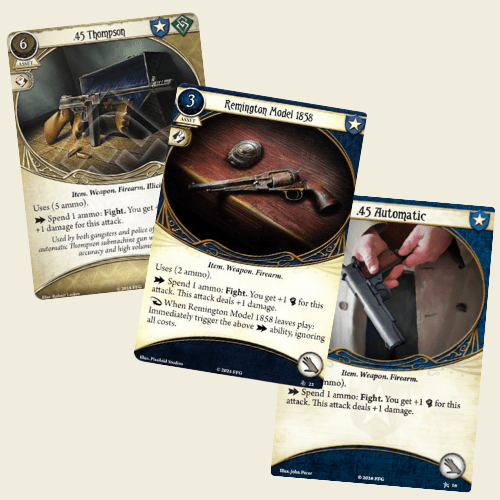
The biggest difference between melee and firearms is that firearms have ammo charges while melee is an infinite use item. Guns might only have 3 uses because they only have three bullets, but a machete doesn’t run out of ammo. For this reason, I typically lean more toward melee weapons than firearms. The extra powers that firearms offer doesn’t always match the weapons cost.
Damage Boosts
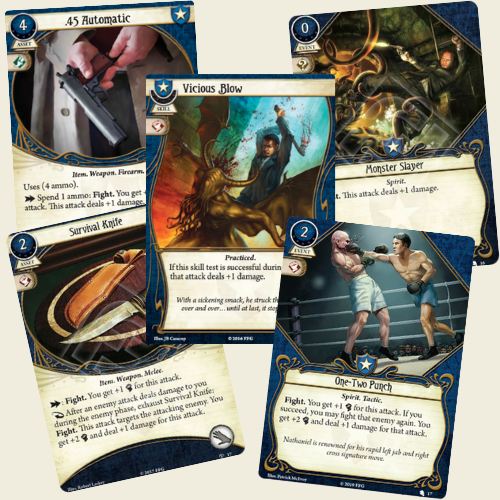
There are also a multitude of non-weapon cards that will get stat, and damage increases to a fight. Some are standalone while others can stack on top of an existing fight (i.e., while using a weapon). While hitting multiple times is a valid strategy, there is also the strategy of one test for big damage numbers that guardian lends itself to well.
Interruption
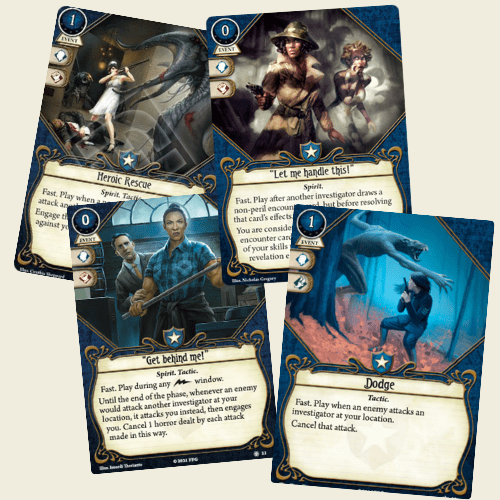
Another big part of the guardian class is interruptions. This category includes redirecting an attack, cancelling said attack, or interrupting other players’ actions. One of the more “niche” versions of this is “Let me Handle This One!” This card will take another player’s mythos and make the owner of the card resolve its effects instead. This can be useful especially when a team’s stat composition is diverse.
The other interruptions include preventing attacks by either canceling or making yourself the target. While this does a decent job of preventing damage, it can also redirect damage to your own character. Some of these cards will even provoke an attack of opportunity in which the monster attacks you for a counter effect to happen.
Healing
With all these wounds and damage being thrown around, you would expect that the guardian class would offer healing. And it does. There are a multitude of ways to heal yourself or others through various means. There are assets, events, and even skill effects that can provide some sort of healing.
This is only needed if getting injured is part of the core strategy. I have seen guardians do a “thorn” build where the investigator does damage by getting attacked. In this case, you need something to soak that damage or else you’re just turning yourself into a punching bag.
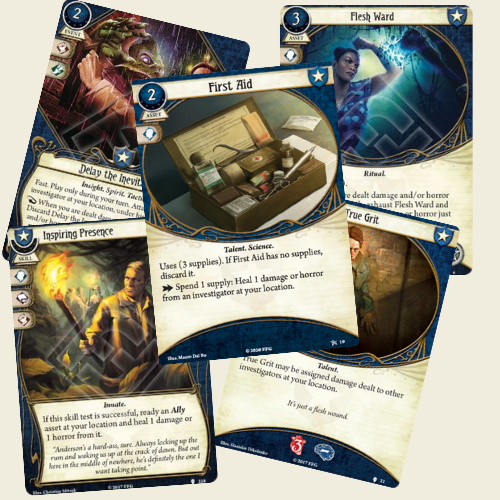
But for those not strategizing around getting punched, healing may not always be high on the priority list. And a lot of guardian investigators naturally have a high level of health which lends them to being punched without being in danger for most cases.
Clue Management
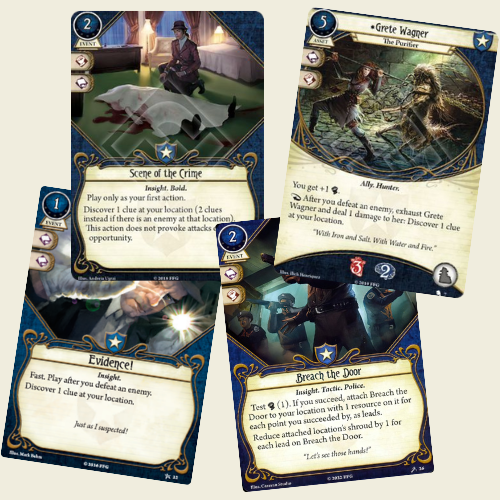
Just because this class is all about fighting doesn’t mean they have no investigating capabilities. They have, like, two? Okay, there are a bit more than that but it’s still low. What’s interesting is they will get clues from fighting or as a side effect of doing another action. Not to say these cards are good, just to know that they are there.
One of the more interesting cards in this realm is “Breach the Door”. This test is a modifier on the location itself by using fight capability to “break the place down” so to speak. The lowering of a shroud is an interesting place (one more lived in by the survivor class). If the test goes well, it’s possible to lower the shroud location to 0. Then, when you investigate, you’re now testing against a 0. And the fun part? Unless it’s the auto-fail token, you’re passing.
Bless
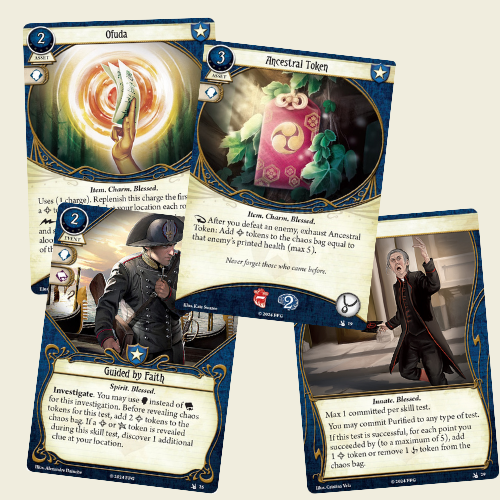
One of the more interesting cards in this realm is “Breach the Door”. This test is a modifier on the location itself by using fight capability to “break the place down” so to speak. The lowering of a shroud is an interesting place (one more lived in by the survivor class). If the test goes well, it’s possible to lower the shroud location to 0. Then, when you investigate, you’re now testing against a 0. And the fun part? Unless it’s the auto-fail token, you’re passing.





Leave a ReplyCancel reply